What I Wish I Knew About Emergency Funds and Smart Investing
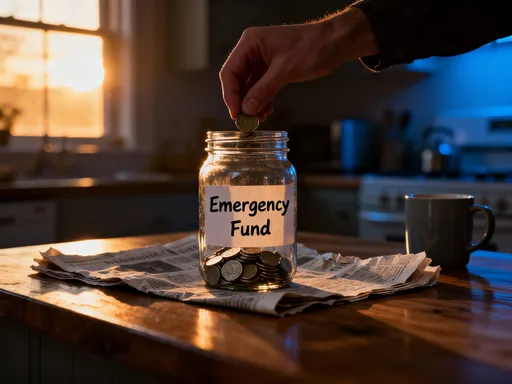
Saving money felt pointless until I faced a real crisis—car repairs, medical bills, all hitting at once. That’s when I learned the hard way: an emergency fund isn’t just cash saved, it’s financial breathing room. But stashing money isn’t enough. I started asking: What if my emergency fund could also work for me—safely? This is how I discovered smarter ways to balance safety, access, and growth. It wasn’t about chasing high returns or taking risks. It was about making thoughtful choices that protect peace of mind while respecting the quiet power of time and compounding. The journey taught me that financial resilience isn’t built in a day, but through consistent, informed decisions anyone can make.
The Wake-Up Call: Why Emergencies Expose Financial Gaps
Many people believe they are financially prepared because they occasionally set aside money. Yet when a real emergency strikes—a sudden job loss, an urgent home repair, or an unexpected medical expense—the illusion of readiness quickly fades. These moments don’t just test bank balances; they reveal whether a person’s savings strategy was built on foundation or fiction. For years, I thought keeping a few hundred dollars in my checking account was enough. Then came the month my car broke down just days after a dental procedure, and I realized I had no real buffer. I had to rely on a credit card, and that single decision added hundreds in interest over the following months. It wasn’t the cost of the repairs that hurt most—it was the compounding stress of scrambling and falling into debt.
This experience is more common than many admit. A 2023 Federal Reserve report showed that nearly 30% of Americans would struggle to cover an unexpected $400 expense without borrowing or selling something. That number rises significantly when the cost exceeds $1,000. The truth is, most people don’t plan for emergencies until one happens. And when it does, the lack of a structured safety net often forces them into high-interest loans, credit card debt, or even dipping into retirement accounts, which can trigger penalties and long-term setbacks. These outcomes aren’t just inconvenient—they can derail years of financial progress.
An emergency fund is not simply a savings goal. It is a financial shock absorber, designed to protect stability when life becomes unpredictable. Its primary role is not to grow wealth but to prevent wealth from being eroded by crisis. That means the most important qualities of an emergency fund are not how much it earns, but how quickly and reliably it can be accessed, and how well it preserves value. A fund that’s locked in a long-term investment or buried in complex accounts defeats the purpose. When an emergency occurs, timing is everything. Waiting days or weeks for a withdrawal can turn a manageable issue into a financial spiral. This is why the first principle of emergency planning must be clarity: know what you need, where it is, and how to reach it—immediately.
Beyond the Savings Account: Rethinking Where Your Safety Net Lives
For decades, the standard advice has been to keep emergency savings in a traditional bank savings account. These accounts offer ease of access and federal insurance through the FDIC, making them a logical starting point. But while they provide security, they often fail to deliver on another critical need: preserving purchasing power. Most traditional savings accounts offer interest rates well below the rate of inflation. Over time, this means that even if the dollar amount stays the same, the real value of the money declines. A thousand dollars saved today may feel substantial, but five years from now, it could buy significantly less.
The good news is that there are better alternatives that maintain safety while offering slightly higher returns. High-yield savings accounts, for example, are offered by many online banks and credit unions and typically pay interest rates several times higher than traditional banks. These accounts are still FDIC-insured, meaning the principal is protected up to $250,000 per depositor, per institution. More importantly, they allow for quick transfers to checking accounts, often within one business day. For someone building an emergency fund, this combination of safety, modest growth, and liquidity makes high-yield savings a smarter default choice than standard savings.
Another option is a money market account, which is different from a money market fund. Money market accounts are deposit accounts offered by banks and are also FDIC-insured. They often come with check-writing privileges or debit cards, making access even easier. While their interest rates can fluctuate, they generally remain competitive, especially when rates across the economy rise. Some require higher minimum balances, but for those who can meet them, the trade-off in convenience and yield is often worth it. Short-term certificates of deposit (CDs) also play a role. These are time-bound deposits that offer slightly higher interest in exchange for keeping funds locked for a set period, such as three to twelve months. While not ideal for the entire emergency fund, they can be part of a tiered strategy where a portion of savings is allocated for slightly longer-term stability.
The key is not to chase the highest possible return but to upgrade the default setting. Moving from a 0.01% interest account to one earning 4% or more—without sacrificing safety—is a simple change with meaningful long-term benefits. It’s not about speculation; it’s about optimization. Every dollar in an emergency fund has a job, and that job includes not losing value to inflation while remaining ready for action.
The Risk-Return Tightrope: Balancing Safety and Growth
When people hear the word “investing,” they often think of stocks, volatility, and risk. But investing isn’t only about growth—it can also be about preservation. The challenge with emergency funds is that they must walk a tightrope: staying safe enough to be reliable, yet active enough to avoid erosion. This balance is especially important for families managing household budgets, where unexpected expenses can disrupt everything from grocery bills to school activities. The goal isn’t to turn an emergency fund into a wealth-building engine, but to ensure it doesn’t quietly shrink in real terms.
One effective approach is tiered emergency funding. Instead of keeping all emergency savings in one place, this method divides the fund into layers based on urgency and time horizon. The first tier—the core emergency reserve—is the most accessible portion, typically covering one to three months of essential expenses. This money should be in a high-yield savings account or money market account, where it can be accessed within 24 to 48 hours. It’s the first line of defense and must never be at risk of loss.
The second tier serves as a buffer for larger or less immediate emergencies, such as a major home repair or a longer job search. This portion might be placed in short-term CDs or Treasury securities, which are backed by the full faith and credit of the U.S. government. These instruments offer slightly higher yields and are considered among the safest investments available. While they may have limited liquidity—for example, early withdrawal from a CD may incur a small penalty—they are appropriate for money that won’t be needed immediately.
A third tier, if applicable, could include ultra-short bond funds or stable value funds, which are designed to maintain a steady net asset value while generating modest income. These are not traditional savings accounts, but they are significantly less volatile than stock market investments. They are best suited for those with larger emergency reserves who want to reduce inflation risk without taking on stock market exposure. The key is alignment: each tier matches a specific need, time frame, and risk tolerance. This structure allows families to protect their financial stability while making thoughtful use of low-risk tools that enhance value over time.
Liquidity Is King: Why Access Matters More Than Yield
No matter how high the interest rate, an emergency fund is useless if it can’t be accessed when needed. Liquidity—the ability to convert assets into cash quickly and without penalty—is the defining feature of any true emergency reserve. A retirement account, no matter how large, is not an emergency fund. A stock portfolio, even if it’s gained value, is not an emergency fund. These are long-term investments with different purposes and rules. An emergency fund must be separate, distinct, and immediately available.
Consider a real-life scenario: a plumbing issue causes flooding in a basement. The repair must happen within days to prevent mold and structural damage. The contractor requires payment upfront. If the money is tied up in an account that takes five business days to process a withdrawal, or if a transfer requires mailing a check, the delay can result in higher costs, more damage, and greater stress. In emergencies, time is not a luxury—it’s a necessity. That’s why the best emergency funds are in accounts that allow electronic transfers, mobile check deposits, and instant access through linked debit cards or ATMs.
Some financial products, while offering attractive interest rates, come with restrictions that make them unsuitable for emergency use. For example, certain CDs impose penalties for early withdrawal, which can erase months of interest and reduce the principal. Brokerage accounts may allow selling of securities, but settlement times—often two to three business days—create delays. Mutual funds and ETFs, while liquid in theory, can lose value if sold during market downturns, defeating the purpose of safety. Even some online banks, while offering high yields, may have slower transfer times between institutions, especially if using ACH networks.
The solution is to prioritize accounts with same-day or next-day availability. High-yield savings accounts with direct integration into online banking platforms are ideal. Credit unions with strong digital services also offer competitive options. The goal is not to maximize interest by a fraction of a percent, but to ensure that when a crisis hits, the money is there—without forms, calls, or waiting. Yield matters, but only after liquidity is guaranteed. A 5% return means nothing if the money isn’t available when it’s needed most.
Inflation’s Silent Threat: Protecting Your Fund’s Real Value
While safety and access are essential, ignoring inflation is a hidden risk. Inflation measures the rate at which prices for goods and services rise over time. When inflation outpaces the interest earned on savings, the real value of money declines. For example, if inflation is 3% per year and a savings account pays only 1%, the purchasing power of the money decreases by 2% annually. Over five years, this erosion can be substantial. A fund that starts at $10,000 may still show $10,000 on a statement, but in real terms, it might only be worth $9,000 or less in today’s dollars.
This is not a hypothetical concern. Over the past decade, the average annual inflation rate in the United States has been around 2.5%, with spikes during certain periods. Meanwhile, the average traditional savings account has paid less than 0.5%. That gap represents a steady loss of value. For families on fixed or limited incomes, this slow decline can make it harder to cover future emergencies, even if the account balance appears stable. The danger is that the loss happens quietly, without a clear event to signal it, making it easy to overlook.
Protecting against inflation doesn’t require taking on stock market risk. There are low-volatility instruments designed to preserve capital while offering modest returns. U.S. Treasury securities, such as Series I Savings Bonds or short-term Treasury bills, are one option. I Bonds, for example, earn interest based on a fixed rate plus an inflation-adjusted rate, meaning they rise when prices go up. They are also exempt from state and local taxes, and federal taxes can be deferred until redemption. While they have a one-year holding period and a limit on annual purchases, they are a powerful tool for preserving value over time.
Ultra-short bond funds are another alternative. These funds invest in high-quality, short-duration debt securities with maturities of less than one year. They are more stable than longer-term bond funds and less affected by interest rate changes. While not FDIC-insured, they are managed to maintain a stable net asset value and provide liquidity. For portions of an emergency fund not needed immediately, these instruments can help offset inflation without introducing significant risk. The objective is not to beat the market, but to keep pace with rising prices—ensuring that the fund retains its usefulness years down the road.
Building a Smarter System: A Practical Framework for Everyone
Creating a resilient emergency fund doesn’t require a large income or financial expertise. It requires a clear plan, consistent action, and the right tools. The first step is to calculate how much is needed. A common guideline is to save three to six months’ worth of essential expenses, including housing, food, utilities, transportation, and insurance. For someone with $3,000 in monthly essentials, that means a target between $9,000 and $18,000. This range provides flexibility based on personal circumstances, such as job stability, health, and dependents.
Once the target is set, the next step is to choose the right accounts. For the core portion—say, the first $5,000—a high-yield savings account is ideal. Many online banks offer rates above 4% with no fees and no minimum balance. Automating monthly contributions, even small ones like $50 or $100, builds momentum. Setting up a direct deposit from a paycheck or a recurring transfer from checking makes saving effortless and consistent. Over time, these small amounts compound, both in balance and in confidence.
For the next tier, consider allocating funds to short-term CDs or Treasury securities. Laddering CDs—opening multiple CDs with different maturity dates—can provide regular access to funds while maximizing interest. For example, opening a 3-month, 6-month, and 12-month CD means one matures every few months, offering flexibility and steady returns. TreasuryDirect.gov allows individuals to buy Treasury bills directly from the U.S. government with no fees and competitive yields.
Regular review is also essential. Life changes—new jobs, growing families, rising costs—mean emergency needs evolve. Reassessing the fund every six to twelve months ensures it stays aligned with current realities. This process doesn’t need to be complicated. It can be as simple as updating a spreadsheet or checking account balances during a quarterly financial check-in. The goal is to maintain a system that is both structured and adaptable, allowing for peace of mind in uncertain times.
Mindset Over Math: The Emotional Discipline Behind Financial Resilience
Numbers matter, but behavior matters more. The most sophisticated financial plan will fail if it’s not supported by consistent habits and emotional discipline. Many people start strong, saving diligently for a few months, only to dip into their emergency fund for non-emergencies—a vacation, a sale item, or a gift. Others become paralyzed by fear, keeping all their money in cash, afraid to move it into higher-yielding accounts even when safe options exist. Still others chase quick returns, tempted by stories of high-flying investments, only to lose money when markets dip.
The truth is, building financial resilience is as much about psychology as it is about finance. It requires trust in the system, patience with progress, and the ability to distinguish between wants and needs. It means celebrating small milestones—like reaching $1,000 saved—without feeling pressured to aim for perfection. It means accepting that setbacks happen, but they don’t have to define the journey. A true emergency fund isn’t just a dollar amount; it’s a commitment to self-reliance and long-term well-being.
For families, this mindset can be passed down. Children who grow up seeing their parents handle money with calm and intention learn that financial stability is possible. They see that emergencies don’t have to mean panic, that preparation brings freedom. This quiet confidence is one of the most valuable legacies a person can leave. It’s not built overnight, but through daily choices—choosing to save instead of splurge, to wait instead of rush, to plan instead of react.
In the end, the goal isn’t just to survive emergencies, but to live with less fear. A smart emergency fund does more than cover unexpected costs; it restores control. It allows a person to make decisions based on what’s best, not what’s urgent. It transforms financial stress into financial strength. And that strength isn’t measured in dollars alone, but in the peace of mind that comes from knowing you are prepared—for whatever comes next.